
Pressure Testing of Water Services
- Discover how pressure testing helps confirm hidden leaks, isolate problem sections and verify repairs - without the need for unnecessary disruption. Learn how the process works, where it's used, and when it's the right solution for your property.
What is pressure testing?
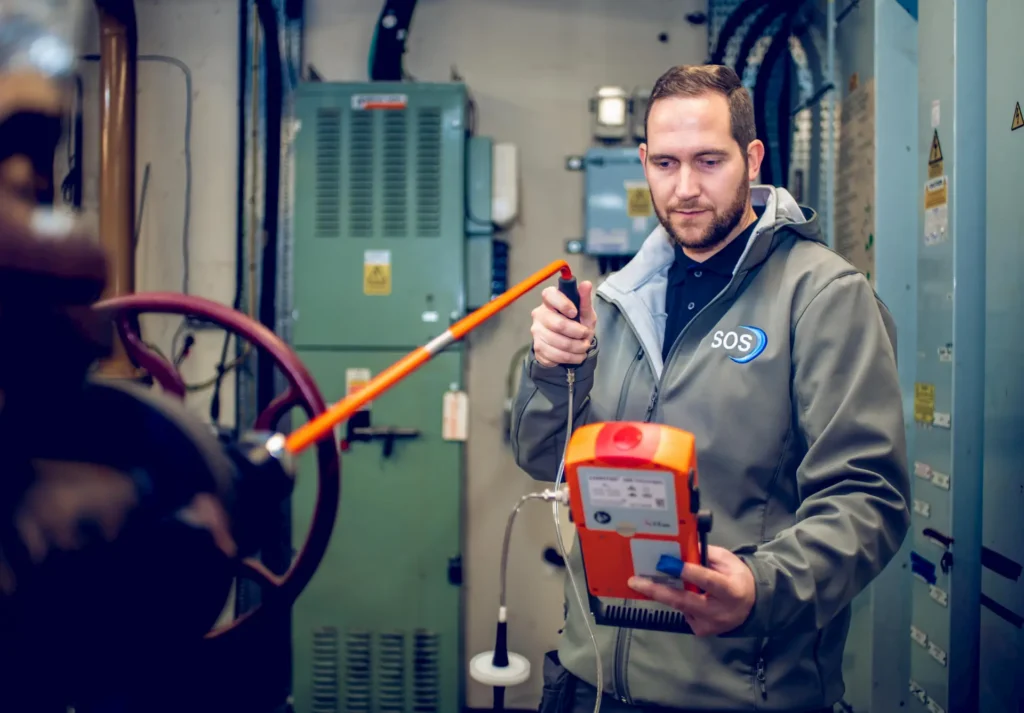
Pressure testing applies a controlled test pressure to an isolated water service and monitors whether that pressure remains stable. Within leak detection, it helps confirm whether a pressurised section is losing water, compare separate service zones and determine where further location methods should be focused.
Primary purpose
- Confirm whether an isolated pressurised service is holding or losing pressure.
- Separate hot, cold, heating or individual branches where reliable isolation is available.
- Support targeted tracer gas, acoustic, thermal or intrusive investigation.
- Verify system stability after repairs or alterations.
How the Process Works
Investigation Sequence
Pressure testing should be planned around the service type, pipe material, normal working pressure and available isolation points. Test pressure, duration and acceptance criteria must be appropriate to the system and applied by competent personnel.
1. Initial review - Review the reported issue, service layout, system status, visible damage and safe access.
2. Isolation plan- Identify test boundaries and isolate outlets, appliances or components that could affect the result.
3. Safe preparation - Drain or vent where required, connect suitable test equipment and agree a controlled test pressure.
4. Controlled pressurisation - Raise the section gradually, allow the reading to stabilise and begin the defined monitoring period.
5. Observation - Record the starting and final pressure, any movement and relevant temperature or site conditions.
6. Verification - Compare sections, repeat where needed and use the outcome to guide leak location, repair or retesting.
Where pressure testing is commonly used
Areas and systems
- Incoming cold-water supply pipework
- Domestic hot and cold-water distribution
- Central heating and closed-loop services
- Concealed shower and wet-room supplies
Diagnostic uses
- Confirming an active pressure loss
- Isolating defective branches or zones
- Supporting tracer gas or acoustic location
- Checking stability after repairs
Benefits, Limitations and Suitability
Technical Interpretation
Pressure testing provides objective evidence about whether an isolated section remains pressurised. Results must be interpreted carefully because pressure movement can also be influenced by temperature change, air in the system, defective valves, connected equipment or the test setup.
Key benefits
- Provides a recorded comparison of starting and final pressure.
- Helps divide complex services into manageable test sections.
- Useful where pipework is concealed and no visual leak is present.
- Can eliminate sound sections and reduce unnecessary access.
- Supports post-repair verification.
Known limitations
- Confirms pressure loss but does not usually pinpoint the exact leak location.
- Incomplete isolation or passing valves can create misleading results.
- Air pockets and temperature changes can affect readings.
- Open or continuously supplied systems need a different approach.
- Pressure and duration must suit the pipe material and connected components.
When pressure testing may not be suitable
Site Control
- Suitable isolation points are unavailable, shared or unreliable.
- Service interruption cannot be safely managed within the occupied building.
- Pipe condition or connected equipment may not tolerate the proposed test.
- The suspected issue relates to drainage, rainwater ingress or another non-pressurised service.
- Readings would be compromised by open outlets, uncontrolled operation or trapped air.
- The test cannot be completed within the system manufacturer or service requirements.
Controlled testing should be undertaken by competent personnel using suitable equipment and documented test conditions.
SOS Leak Detection Ltd
Nationwide specialist leak detection
0800 046 3492 | enquiries@sosleakdetection.com
sosleakdetection.com
Explore our leak detection services




Contact Your Leak Detection Specialists Today
"*" indicates required fields