
| Site type | Commercial site sprinkler pipework |
|---|---|
| Sector | Commercial |
| Challenge | Leak noise along the whole pipe run prevented acoustic location |
| Solution | Acoustic, pressure and tracer gas testing over two days |
| Result | Leak indicated beside bike shed; targeted trial excavation recommended |
The Challenge
Reported movement on the plant-room water pump serving the ring main and fire hydrant sprinkler system prompted an investigation. Visual checks found no evident exterior damage or issues with visible internal pipework.
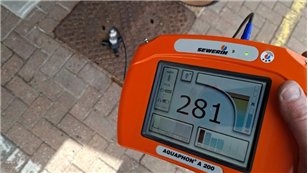
Acoustic testing detected sound consistent with a leak, but noise travelled along the entire pipe run. The exact point could not be determined, so SOS progressed to pressure and tracer gas testing.
Key Challenges
- Leak noise along the entire pipe run
- No visible cause on initial inspection
- A concealed fire sprinkler pipe leak
- Low initial tracer gas detections
- Narrowing the area for trial excavation
The Solution
SOS combined acoustic testing with pressure monitoring and tracer gas to investigate the fire sprinkler pipework.
Testing continued over two days, building on the initial gas detections to identify an area for targeted trial excavation beside the bike shed.
Inspection and acoustic testing: Visual checks found no evident cause. Acoustic testing detected leak-like noise along the full pipe run, preventing an exact location.
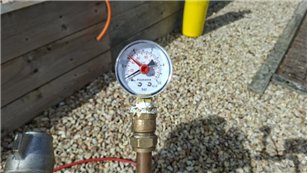
Day 1: six hours of testing: The sprinkler pipework was drained and filled with tracer gas at 1.5 bar. A pressure drop over six hours confirmed a leak.
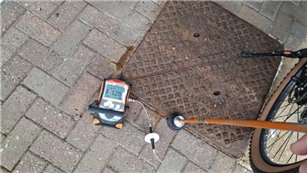
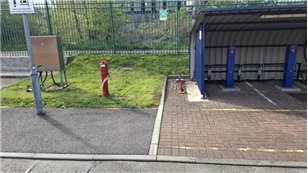
Following the first detections: Low gas volumes were detected at the grass verge and electrical conduit chamber near the bike shed. Gas remained in the pipework between days.
Day 2: stronger evidence: Tracer gas was reintroduced at 1.5 bar for five hours. Pressure fell again, with significant gas detected around the same grass and chamber area.
The Results
The findings indicated a fire sprinkler pipe leak adjacent to the bike shed. The report recommended an approved building contractor carry out a trial excavation on the grass verge where the highest gas readings were recorded.
- Pressure drops confirmed a leak on both days
- Tracer gas was introduced at 1.5 bar each day
- Six hours of testing on day one; five on day two
- Gas detections strengthened on the second day
- Grass verge beside the bike shed identified for excavation
- Repair and testing recommended before reinstatement
Why SOS Leak Detection?
When acoustic noise could not isolate the leak, SOS extended the investigation with pressure and tracer gas testing. Two days of evidence identified the suspected leak area and gave the contractor a focused starting point for trial excavation.
-
Complementary methods
Acoustic findings guided the next stage: pressure monitoring and tracer gas testing. -
Persistence over two days
Six hours of testing on day one, followed by five hours on day two. -
Stronger site evidence
Low initial gas detections became significant detections on the second day. -
A focused excavation area
The highest gas readings guided the recommended trial excavation beside the bike shed. -
Clear next steps
Appoint an approved contractor to trial excavate, then repair and test before reinstatement.
Contact Your Leak Detection Specialists Today
"*" indicates required fields