
| Site type | School with boosted water distribution |
|---|---|
| Sector | Education |
| Challenge | High weekend consumption with an uncertain leakage source |
| Solution | Isolation and acoustic checks, thermal imaging and inspection |
| Result | No incoming leak indicated; internal defects located and marked for repair |
The Challenge
The school reported high water use between Friday evening and Monday morning. No internal valves had been isolated for the original check. A class of 60 people had used the building after the first reading, and a tap had been running continuously.
That tap had already been repaired before SOS attended. The investigation needed to assess the incoming supply, trace the internal distribution and identify remaining defects that could contribute to the high consumption.
Key Challenges
- Separating leakage from legitimate water use
- Defective stop tap within the kitchen boxing
- Tank refill during contractors' water use
- Concealed toilet fittings across both floors
- Several defects contributing to water loss
The Solution
SOS located the external meter, internal isolation points and second-floor plant room. The kitchen stop tap was defective, but a working lever valve above it allowed the internal supply to be isolated.
The incoming main fed cold-water storage, with booster pumps supplying the school and a separately metered cold feed to the hot-water cylinder. Pipework ran along surfaces and dropped to the ground floor with none buried beneath the floors, which allowed visual inspection of most of it.
Incoming supply isolation: With the internal lever valve shut, the external meter remained static for four hours. This tested the section between the external meter and the kitchen lever valve.
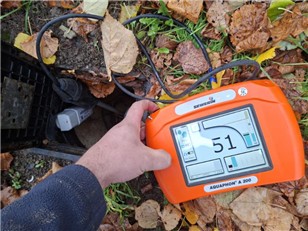
Acoustic confirmation: Acoustic checks at several points on the incoming pipework found no sound anomalies indicating water flow with the internal supply isolated, supporting the static-meter result.
Plant and service checks: The hot-water feed meter showed no usage during inspection. The cold tank continually refilled, although contractors were using water. There were no reported heating issues.
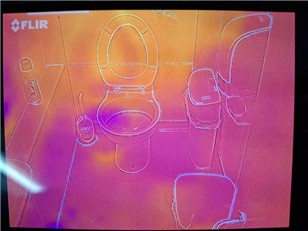
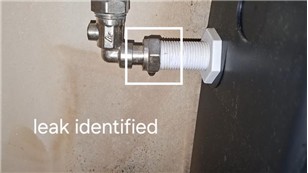
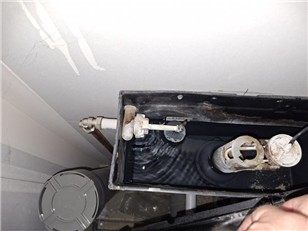
Thermal and visual checks: Cooling anomalies prompted closer checks behind toilets. Visual inspection confirmed leaks at valves and flush pipes, dripping taps and toilets passing water into their pans.
The Results
The incoming pipe between the external meter and the kitchen lever valve showed no leakage during the controlled four-hour test. Internal inspections identified defects across both floors. SOS showed the leaks and passing toilets to the caretaker and marked the affected toilet locations with yellow stickers, so the site could arrange repairs at the identified fittings.
- Ground-floor reception: leaking isolation valve behind a concealed toilet
- Ground-floor mixed toilets: one leaking flush pipe
- Upstairs men's toilets: leaking flush pipes in cubicles 2 and 5
- Upstairs women's toilets: leaking flush pipes in cubicles 1 and 5
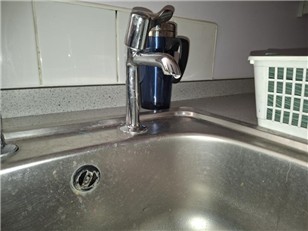
- Across the site: five dripping taps, shown to the caretaker
- Upstairs mixed toilet: faulty fill valve and continuous flow into the pan, with other passing toilets also identified
Understanding the high consumption
To explore the earlier tap's contribution, the site recreated its previous flow. It filled a one-litre jug in about one minute, equivalent to roughly 60 litres per hour. The report considered the running tap a possible explanation for much of the original high consumption.
That demonstration did not measure the combined losses from the other defects. The investigation concluded with identified repair locations and a recommendation to repeat the weekend test after repairs, with no water use on site.
Why SOS Leak Detection?
SOS identified several sources of internal water loss, including leaks at pipe connections and toilets discharging continuously into the pan. The original weekend check also included legitimate building use and the previously running tap. The investigation gave the caretaker specific fault locations and recommendations for repairs and a controlled retest.
-
Supply boundary tested
Testing assessed the pipe between the external meter and the working kitchen lever valve, with no usage during the four-hour isolation. -
Internal losses located
Five leaking flush pipes and five dripping taps were identified, alongside a leaking isolation valve, a faulty fill valve and other passing toilets. -
Faults marked on site
Yellow stickers marked affected toilet locations and the faults were shown to the caretaker. -
Repair status
The report recommended a qualified contractor to repair the remaining highlighted toilets and leaks. -
Controlled verification
Repeat the weekend meter check with no water use on site once all highlighted leaks have been repaired.
Contact Your Leak Detection Specialists Today
"*" indicates required fields