
| Property type | Residential apartment building |
|---|---|
| Challenge | Intermittent water damage to a basement ceiling with no active leak visible |
| Solution | Visual, thermal, moisture, endoscope, pressure, dye and flood testing |
| Survey date | 7 July 2026 |
| Result | No active leak identified; stable pressure confirmed and a monitoring plan issued |
The Challenge
Intermittent water damage and mould staining had been reported to a basement ceiling. The escape had not recurred since April, making the source difficult to reproduce during attendance.
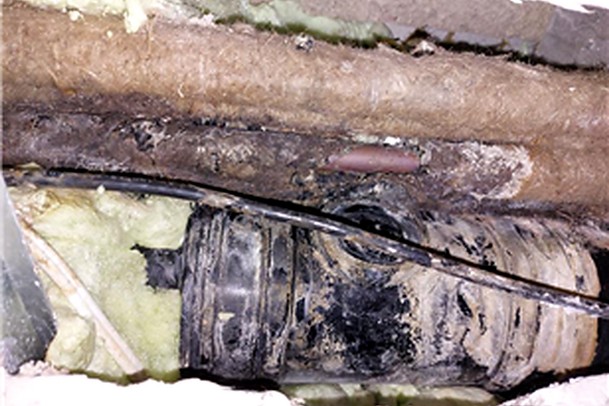
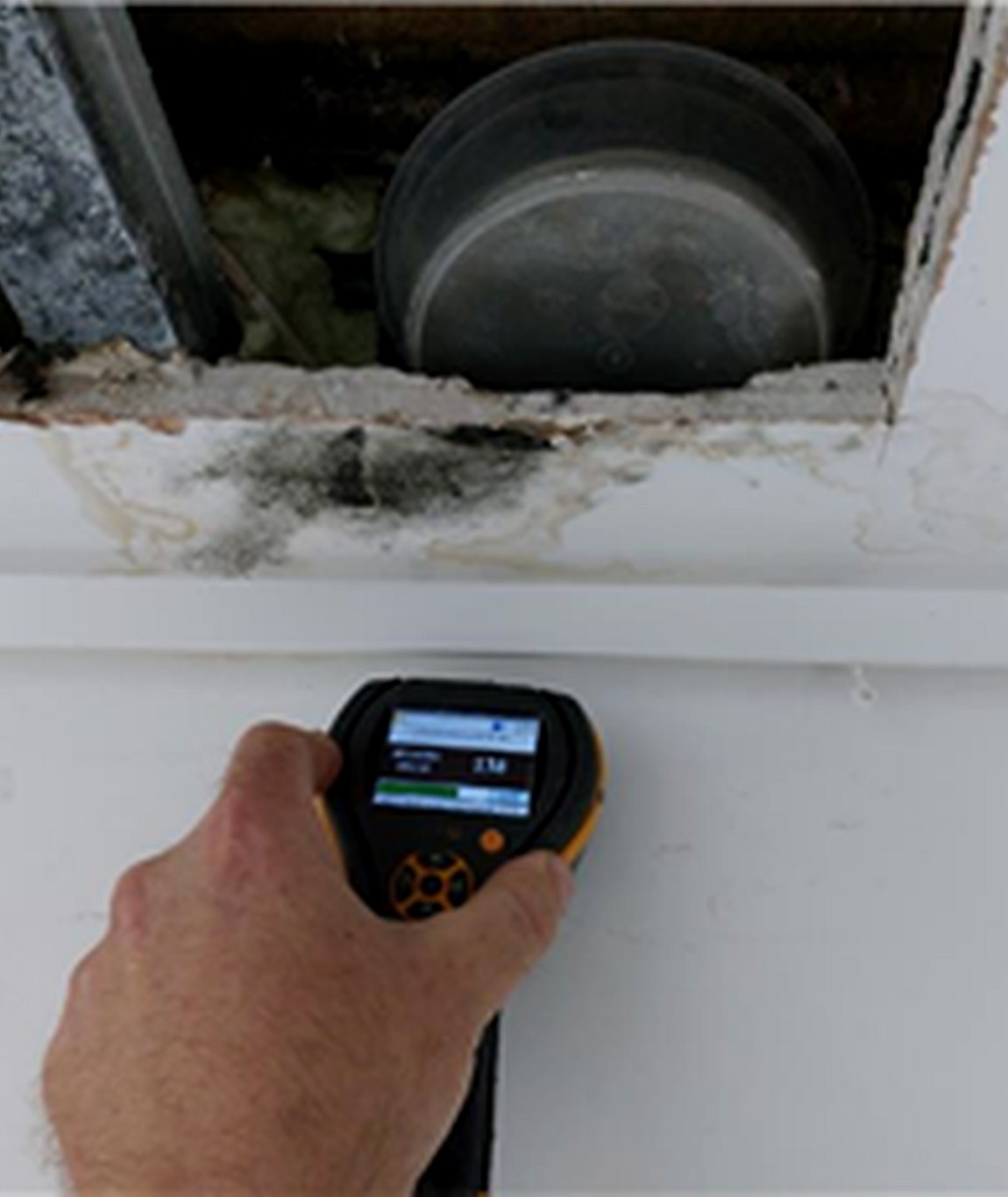
Historic staining was concentrated around a waste pipe passing through the concrete slab from the bathroom above. The investigation needed to establish whether the cause was an active pressurised leak, a concealed waste defect, shower ingress or a historic intermittent event.
Key Challenges
- Intermittent issue not active during the survey
- Water staining around a ceiling-void waste pipe
- Concrete construction restricted direct access
- Multiple possible sources in the bathroom and kitchen above
- Need to distinguish current leakage from historic damage
The Solution
A staged, evidence-led investigation combined non-invasive diagnostics with targeted testing of the services and fixtures above the affected basement ceiling.
Visual and pipework inspection: The affected ceiling, access opening and visible waste pipework were inspected. Historic staining and mould were recorded, but no active escape was visible.
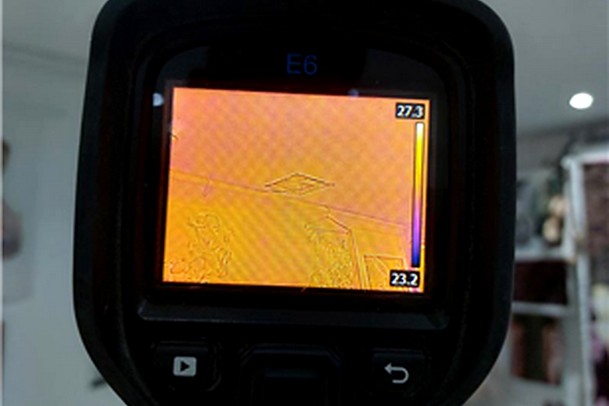
Thermal and moisture assessment: Thermal imaging found no significant anomaly and moisture testing recorded no raised readings within the affected area.
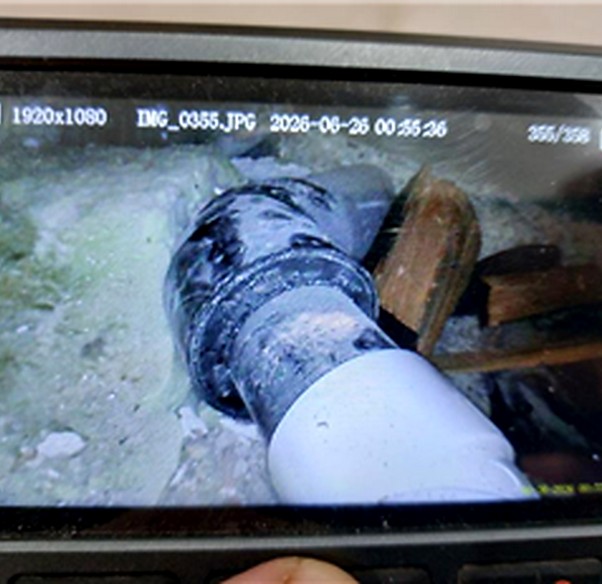
Endoscope inspection: Concealed kitchen and bathroom pipework, including the area beneath the shower, was inspected with no leakage identified.
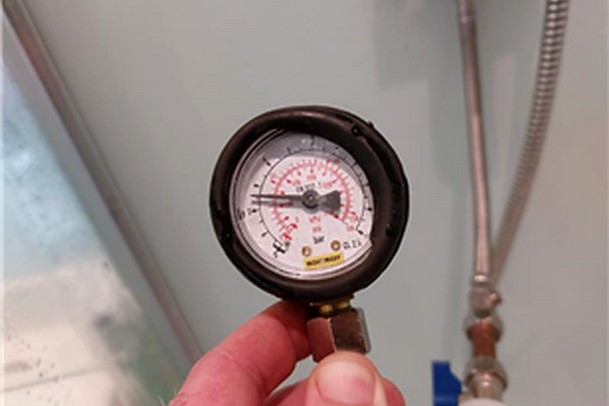
Pressure, dye and flood testing: Hot and cold supplies held pressure for one hour. Flow, dye and shower flood testing produced no water ingress into the basement.
The Results
The investigation found no active escape of water on the services at the time of testing. The evidence supported a monitoring-led approach rather than unnecessary opening-up or speculative repair.
- No active leak was visible in the ceiling void or accessible pipework
- No significant thermal anomaly or raised moisture reading was recorded
- Endoscope inspection found no concealed leakage
- Domestic hot and cold supplies held pressure for one hour with no drop
- Flow, dye and shower flood testing produced no ingress into the affected area
- Low boiler pressure was restored and both the boiler and ceiling area were placed under monitoring
Why SOS Leak Detection?
This project demonstrates why intermittent water ingress requires a broad, evidence-led investigation before repair decisions are made.
-
Multi-method investigation
Visual, thermal, moisture, endoscope, pressure, dye and flood testing were combined. -
Evidence-led exclusions
No current leak was identified on the pressurised services. -
Targeted access
The existing ceiling opening was used to inspect the waste pipe and surrounding void. -
Avoided unnecessary works
No speculative opening-up or replacement was recommended. -
Practical monitoring plan
The boiler pressure and affected ceiling were placed under observation.
Contact Your Leak Detection Specialists Today
"*" indicates required fields