
| Property type | Multi-storey building with a flat roof and roof-level drainage |
|---|---|
| Challenge | Rainwater ingress during heavy rainfall, with internal water damage around soil stack locations |
| Solution | Roof inspection, moisture and thermal checks, flood and dye testing, and tracer gas testing |
| Result | Widespread waterproofing membrane failure identified, with soil stacks and roof outlets ruled out as the primary defect |
The Challenge
A multi-storey site reported rainwater ingress from the roof, with leakage occurring internally during heavy rainfall around soil stack locations.
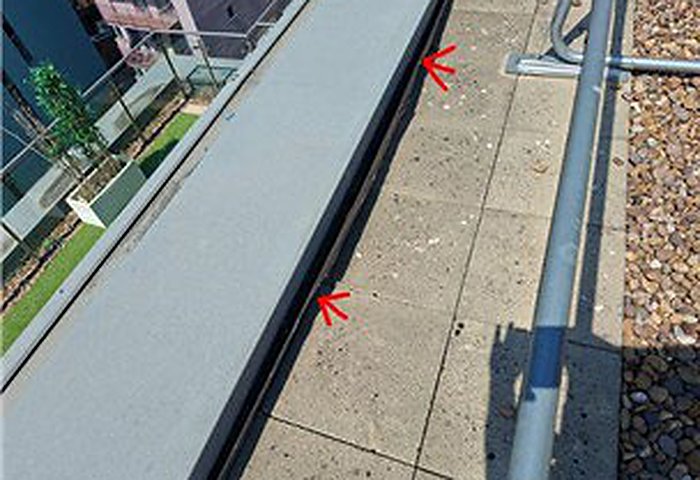
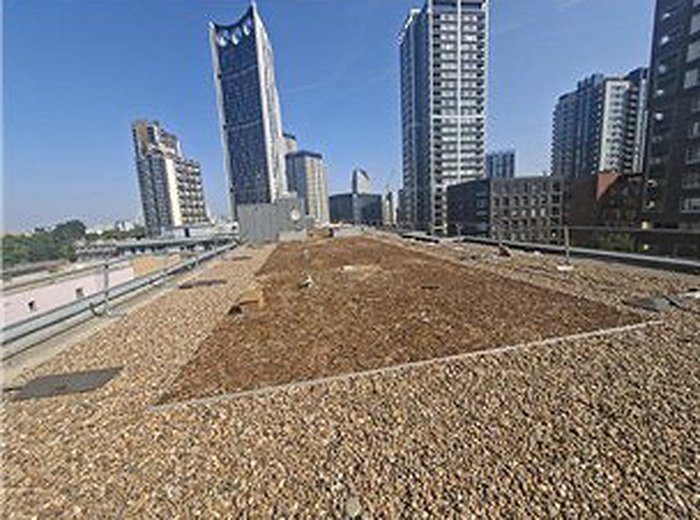
The roof was found to be affected by widespread waterproofing membrane deterioration. The membrane had become loose, blistered and separated in several areas, allowing water to sit on the roof and potentially migrate beneath the covering.
The investigation needed to confirm whether the ingress was caused by roof drainage or soil stack defects, or by failure of the wider waterproofing system.
Key Challenges
- Ingress presented during heavy rainfall and flash-flood conditions
- Extensive membrane lifting, blistering and perimeter separation
- Internal water damage around soil stack and ceiling void areas
- Full rainfall conditions could not be replicated due to heat and low water pressure
- Need to rule out soil stacks and roof outlets before defining the repair scope
The Solution
SOS Leak Detection followed a structured, evidence-led process to confirm how rainwater was entering the building and to avoid unnecessary opening-up works to unaffected areas.
Roof and internal inspection: The roof membrane, perimeter details, roof door areas and internal water-damaged locations were visually inspected to map the likely ingress pathway.
Moisture and thermal checks: Moisture testing and thermal imaging were carried out to assess the internal affected areas. No significant active anomalies were observed during the visit.
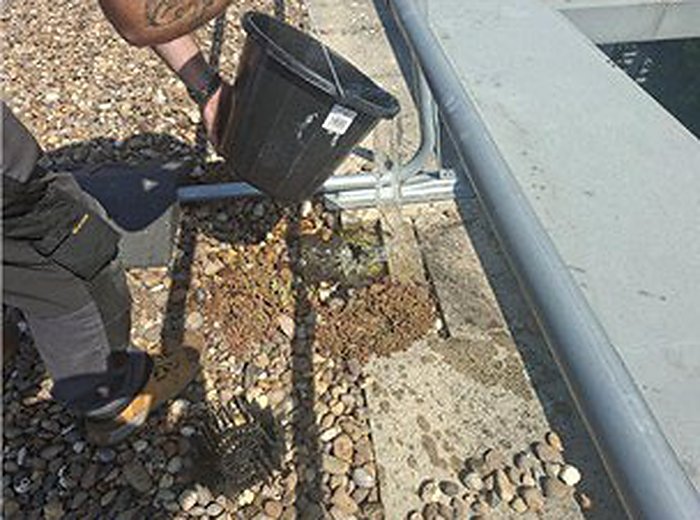
Flood and dye testing: Roof drainage holes, soil stack locations and surrounding membrane areas were flood and dye tested, with no immediate internal dye or water ingress observed.
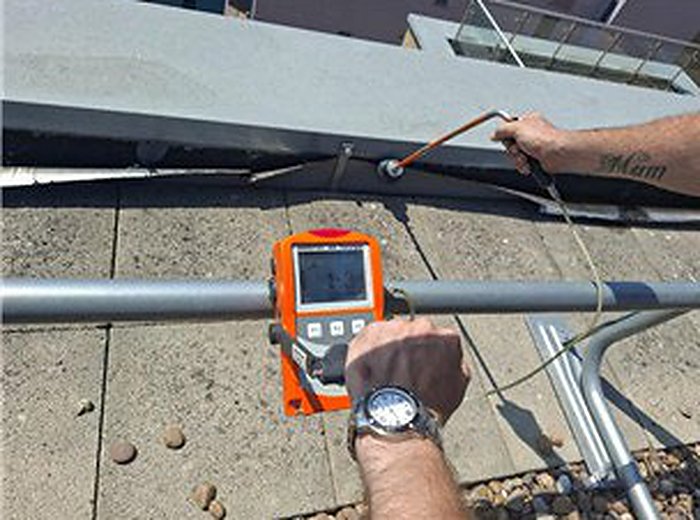
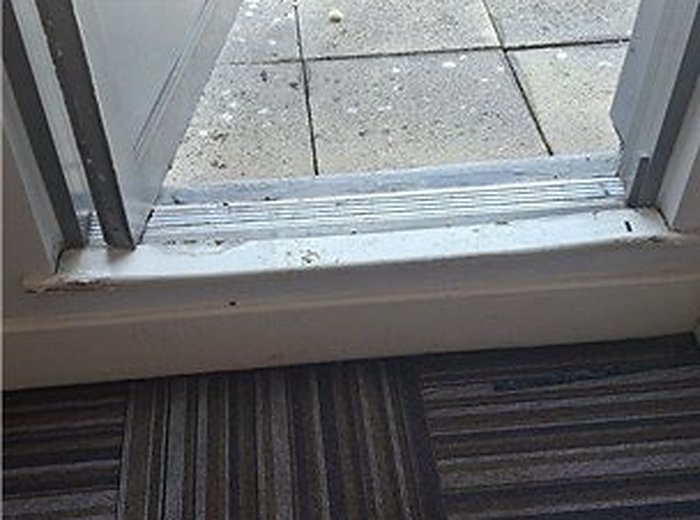
Tracer gas confirmation: A safe inert gas was introduced into the ceiling void by the soil stacks. Gas was detected escaping around the damaged membrane edge and roof door area.
The Results
The reported water ingress was attributed to widespread deterioration and failure of the roof waterproofing membrane, which was damaged, blistered and separated around the roof perimeter, allowing rainwater to enter beneath the covering. Localised flood and dye testing did not identify a direct defect with the soil stacks or drainage outlets themselves.
- Widespread membrane deterioration identified as the primary cause of ingress
- Membrane damaged, blistered and separated around the roof perimeter
- Soil stacks and roof drainage outlets ruled out as the primary defect
- The exposed soil stack location was covered by membrane at roof level, confirming water was migrating beneath the roof covering
- Recommendation to remove and replace the complete waterproofing membrane and inspect the roof deck and insulation once exposed
- Roof falls, drainage capacity and all perimeter details to be reviewed as part of the remedial works
Why SOS Leak Detection?
This project demonstrates SOS's ability to evidence complex rainwater ingress pathways where direct rainfall conditions are difficult to recreate.
-
Non-destructive investigation
Visual, moisture, thermal, dye and tracer gas techniques were combined. -
Evidence-led diagnosis
Membrane failure was identified as the wider cause, not a single local pipe defect. -
Targeted testing
Soil stacks and roof outlets were ruled out as the primary source. -
Operational clarity
A focused remedial route was provided for the client and roofing contractor. -
Reduced unnecessary works
Opening-up beyond the areas required to confirm the water pathway was avoided.
Contact Your Leak Detection Specialists Today
"*" indicates required fields