
| Site type | Multi-property residential site |
|---|---|
| Sector | Residential / Property Management |
| Challenge | High water bills with approximately 1 litre per second unaccounted for |
| Solution | Isolation, pressure testing, tracer gas, acoustic testing and targeted excavation |
| Result | Failed 15 mm copper supply repaired; further leakage identified for investigation |
The Challenge
SOS Leak Detection was appointed to investigate unusually high water bills across a multi-property residential site. No visible damage was evident within the properties, but clean water was observed continually entering drainage chambers around the site.
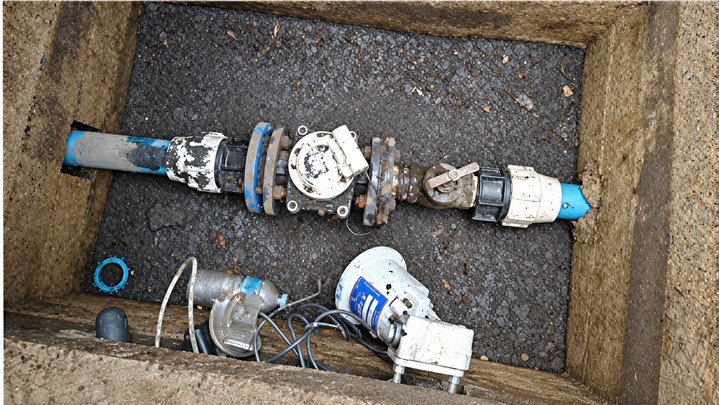
With internal outlets isolated, the external water meter continued to move at approximately one litre per second. The underground network served several properties, so the investigation combined isolation, pressure testing, tracer gas and acoustic testing to progressively narrow the areas of water loss.
Key Challenges
- Continual meter movement remained after all internal outlets were isolated
- Water loss was estimated at approximately 1 litre per second
- Pressure testing and a six-hour tracer gas test both confirmed leakage
- Multiple tracer gas and acoustic anomalies were detected across the site
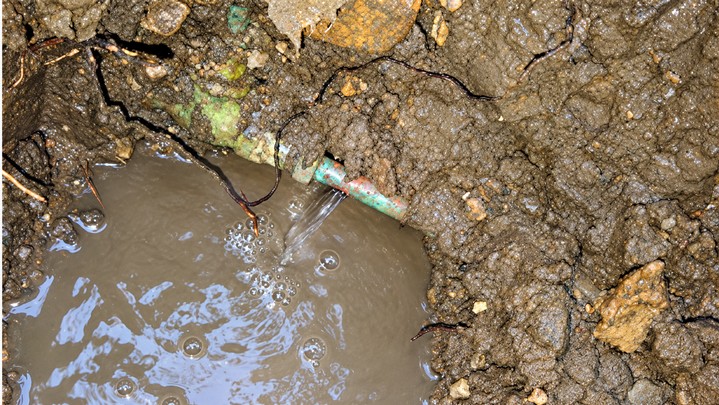
- Initial excavations exposed pipework but did not reveal the primary visible failure
The Solution
A staged investigation combined meter observation, isolation testing, pressure testing, tracer gas, acoustic surveying and targeted excavation to separate multiple suspected leak zones and expose the failed water supply pipework.
Meter and isolation testing: All internal outlets were isolated and the external meter was checked. Continued movement of approximately 1 litre per second confirmed that water loss remained on the buried supply network.
Pressure and tracer testing: A 30-minute pressure test recorded a pressure drop. The supply was then drained and charged with tracer gas at 1 bar for six hours, with a further pressure drop confirming active leakage.
Leak location survey: Tracer gas readings and acoustic anomalies were detected at several locations. Readings of 1500 ppm were recorded within a vacant plot, with further high readings and leak noise identified elsewhere.
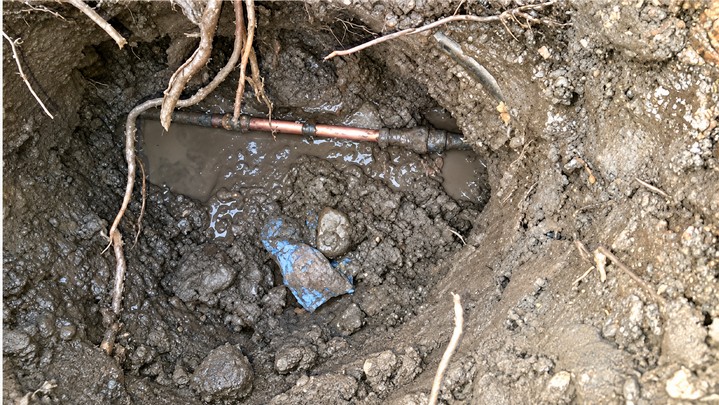
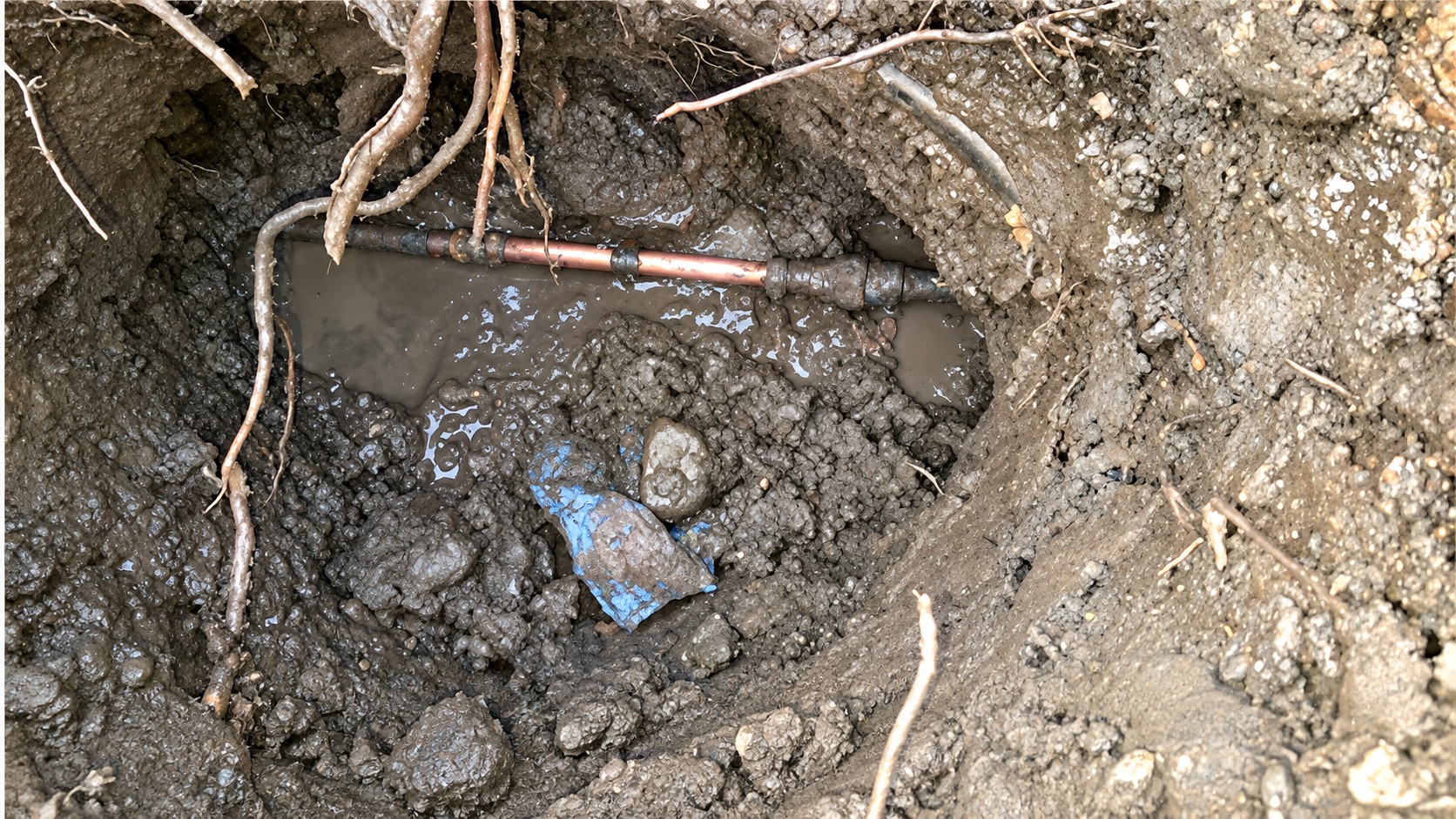
Targeted excavation: The first two excavations exposed water supply pipework without visible leakage. A third excavation within the vacant plot exposed the failed section of 15 mm copper pipework.
The Results
The investigation successfully located a failed section of 15 mm copper water supply pipework within the vacant plot. The defective section was repaired during the visit and subsequent testing identified no further escape from that section. All excavation areas were made safe and the water supply was reinstated. A separate area of leakage remained identified for follow-up investigation.
- Continued meter movement confirmed water loss after internal outlets were isolated
- Pressure testing and the six-hour tracer gas test both recorded pressure loss
- Tracer gas readings of 1500 ppm were recorded within the vacant plot
- Acoustic and tracer gas anomalies identified more than one suspected leak zone
- The third excavation exposed a failed section of 15 mm copper water supply pipework
- The failed section was repaired, retested and the excavations were made safe
Why SOS Leak Detection?
This project demonstrates the value of combining meter-led isolation, pressure testing, tracer gas, acoustic investigation and targeted excavation on a complex buried water network. The approach progressively separated competing indications, exposed the confirmed pipe failure and enabled a repair during the same attendance while clearly identifying the remaining area requiring further investigation.
-
Evidence-led diagnosis
Meter movement and pressure loss confirmed genuine buried water loss before excavation. -
Multi-method location
Tracer gas and acoustic testing were used together to narrow multiple suspected leak zones. -
Targeted excavation
Three controlled excavations exposed the buried supply without unnecessary wider groundworks. -
Repair verification
The failed 15 mm copper section was repaired and retested with no further escape. -
Clear follow-up plan
A separate leak indication remained documented for additional investigation and possible rerouting.
Contact Your Leak Detection Specialists Today
"*" indicates required fields