
| Site type | Large industrial manufacturing facility |
|---|---|
| Sector | Industrial / Manufacturing |
| Challenge | High water consumption with approximately 40 litres per minute unaccounted for |
| Solution | Chamber inspection, acoustic testing, controlled isolation and targeted repair |
| Result | Primary leak excavated and repaired; second supply section remained under monitoring |
The Challenge
SOS Leak Detection was appointed to investigate unusually high water consumption at a large industrial manufacturing site. Previous investigations had already highlighted two possible areas of concern on the incoming water supply network, with excavation works underway in one location but no visible leak identified.
The site contained a complex network of buried pipework, inspection chambers and isolated plant areas. Water was continuously entering two chambers and the boundary meter indicated an estimated loss of approximately 40 litres per minute, requiring the investigation to distinguish between multiple potential leak zones.
Key Challenges
- Approximately 40 litres per minute of water loss indicated at the boundary meter
- Two separate potential leak areas had been identified across the site
- Water was continuously entering two inspection chambers
- Previous excavations had found water but no visible pipe failure
- Buried supply routes and low acoustic quality complicated exact pipe tracing
The Solution
A structured site-wide investigation combined visual inspection, chamber checks, acoustic testing, boundary meter assessment and controlled isolation to separate the suspected leak zones and define the next stage of intrusive works.
Chamber inspection: Inspection covers along the service road were opened and checked. Two chambers were found with water continuously entering, while visible pipework and hydrants showed no obvious defects.
Acoustic testing: Testing of the concealed incoming supply detected a strong sound anomaly along the service road, consistent with an escape of water from buried pipework.
Meter assessment: The boundary water meter was inspected and the total unaccounted water loss was estimated at approximately 40 litres per minute.
Controlled isolation: An isolation valve near a plant area was temporarily closed with authorisation. The boundary meter then remained static, confirming the isolated supply was linked to the second suspected leak zone.
The Results
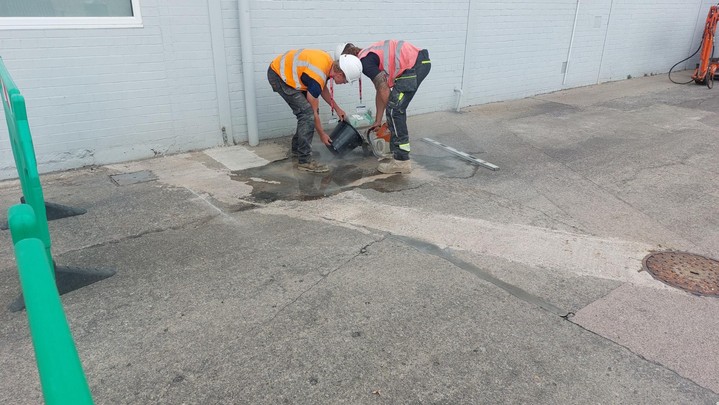
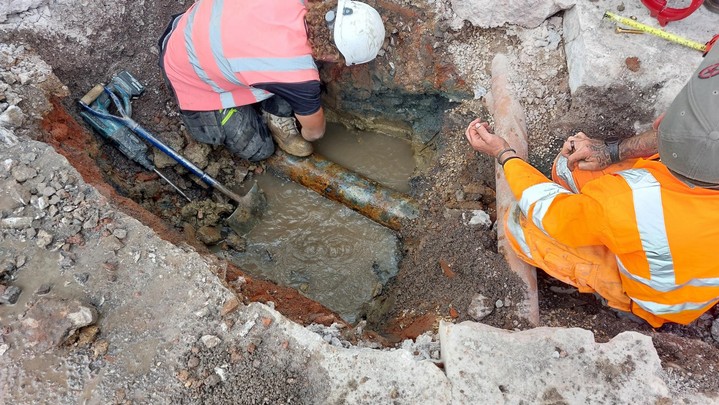
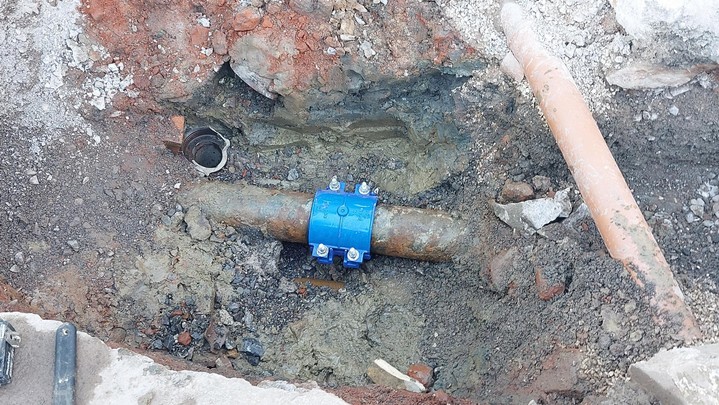
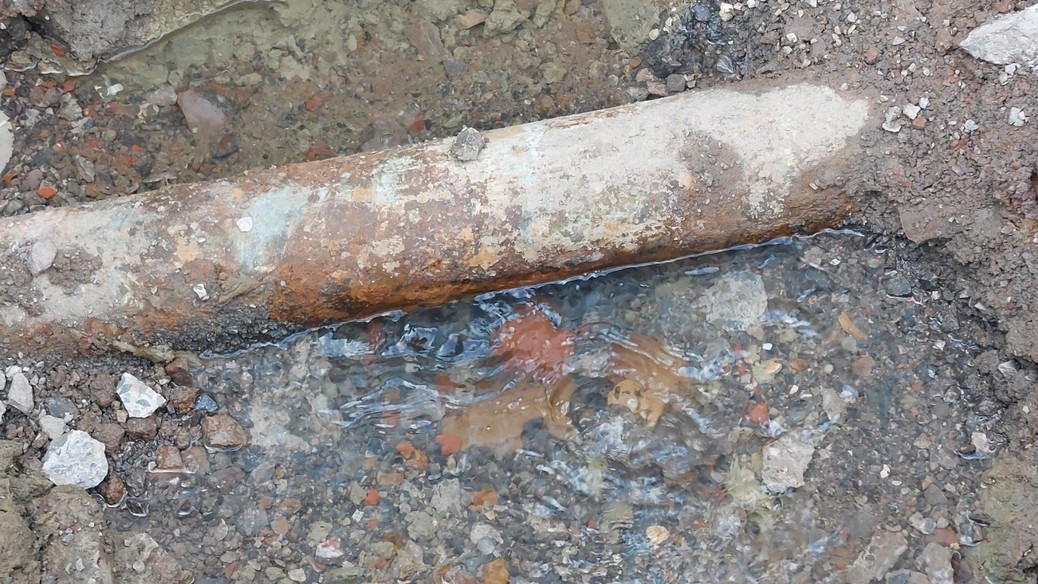
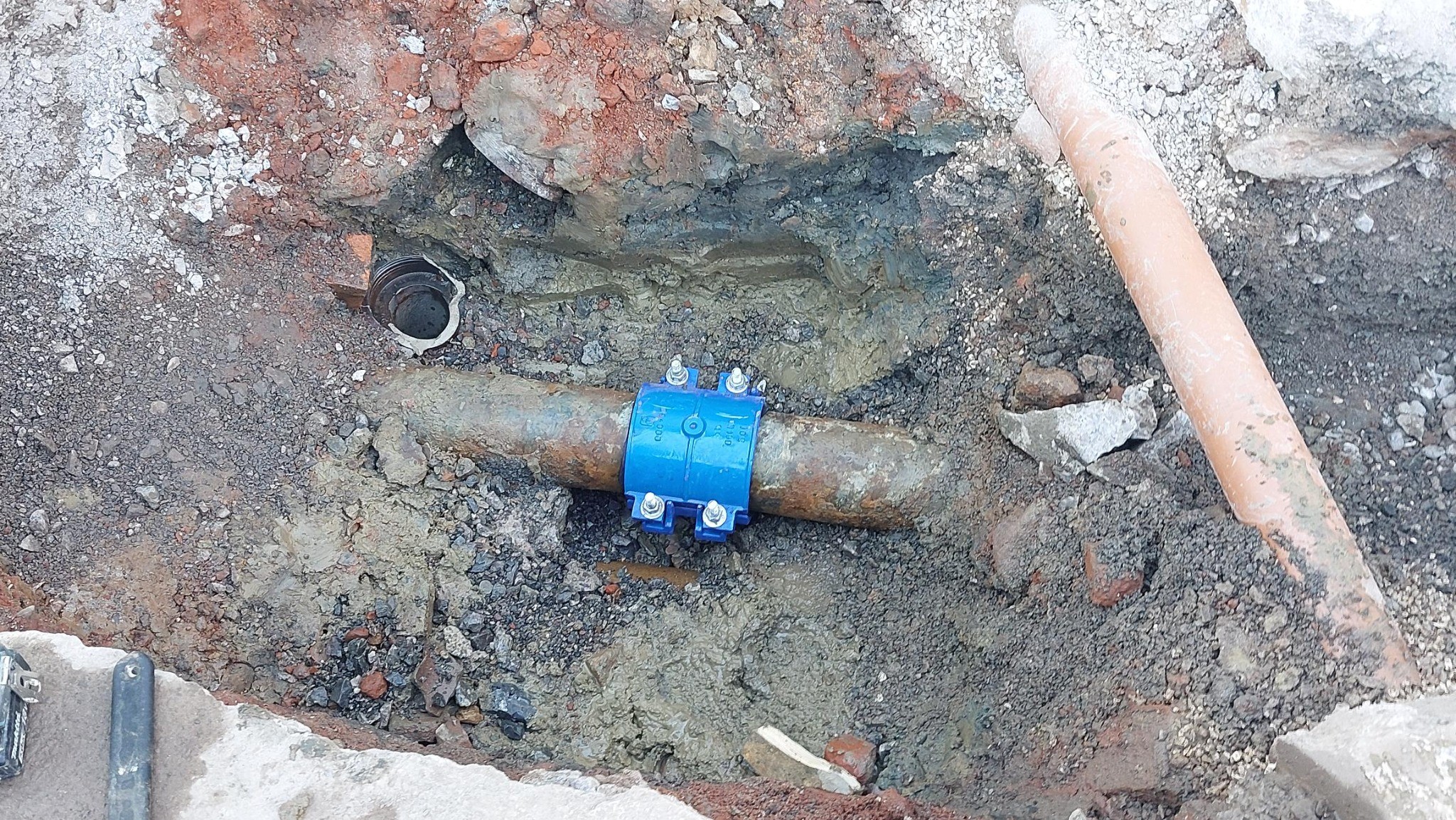
The initial investigation confirmed that the high consumption was linked to the incoming water supply pipework and identified a distinct primary leak zone along the service road. Follow-on works then excavated the confirmed location, exposed and identified the leak, installed a clamp repair and made the area safe before backfilling. The second supply section remained under monitoring.
- Two inspection chambers showed continual water ingress during the survey
- Acoustic testing identified a significant anomaly on the concealed incoming supply
- Boundary meter readings indicated approximately 40 litres per minute of water loss
- Temporary isolation caused the boundary meter to become static
- The primary leak zone was excavated and the defect physically identified
- A clamp repair was installed and the area was made safe and backfilled
Why SOS Leak Detection?
This project demonstrates the value of combining large-site investigation, acoustic testing and controlled isolation when high water consumption may involve more than one buried supply defect. The confirmed primary leak zone was subsequently excavated, the defect identified and repaired with a clamp before the area was made safe and backfilled.
-
Site-wide investigation
Multiple chambers, exposed services and suspected supply routes were assessed systematically. -
Acoustic leak indication
A significant sound anomaly identified the primary service-road leak zone. -
Quantified water loss
Boundary meter observations indicated approximately 40 litres per minute of loss. -
Isolation confirmation
Closing one supply valve made the boundary meter static and separated the second leak zone. -
Targeted repair
The confirmed anomaly was excavated, repaired with a clamp and safely backfilled.
Contact Your Leak Detection Specialists Today
"*" indicates required fields