
| Site type | Farmyard and houses, separate sub-metered supplies |
|---|---|
| Sector | Agricultural / Residential |
| Challenge | Excessive water usage and a main meter that was not registering flow |
| Solution | Supply isolation, tracer gas and acoustic testing |
| Result | Leak narrowed to a 3-metre section, providing a focused starting point for repairs |
The Challenge
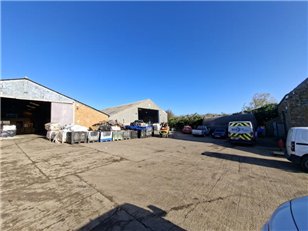
Excessive water usage was reported at a site with separate supplies serving houses and a farmyard. SOS was instructed for trace only, as the client had their own supplier for excavation and repair.
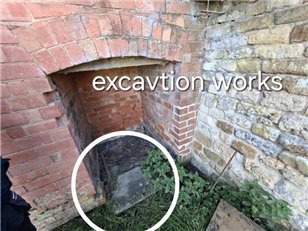
The main meter was not registering audible flow. House sub-meters were static, while the farmyard meter showed continuous usage. Standing water was also present in an existing excavation from an earlier repair.
Key Challenges
- Separate house and farmyard supplies
- Main meter not registering audible flow
- Continuous usage on the farmyard supply
- Standing water in an existing excavation
- Concealed pipework near the foundations
The Solution
SOS checked the main meter and individual sub-meters, then isolated the farmyard supply to narrow the search.
Tracer gas and acoustic testing provided supporting evidence of a leak. A separate pressure check assessed the remaining supply towards the farmyard.
Meter and supply checks: House sub-meters were static. The farmyard meter showed continuous usage, while the main meter failed to register audible flow.
Isolation to three metres: Meter movement continued after the stop tap towards the farmyard was closed, narrowing the leak to three metres.
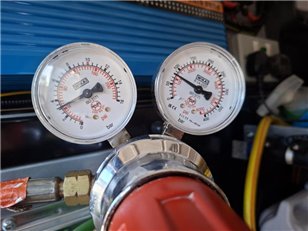
Tracer gas confirmation: The section was drained and tested with tracer gas at 1 bar. Pressure fell, with higher gas readings outside the outbuilding.
Acoustic and further checks: External pipework produced leak noise. The separately tested supply towards the farmyard held pressure, indicating no further leaks on that tested section.
The Results
The leak was narrowed to a three-metre section, with an area highlighted for excavation and repair. This provides a defined starting point for opening up the pipework and planning access. The separately tested supply towards the farmyard held pressure, while the main meter fault was flagged for attention from the water supplier.
- Leak narrowed to a 3-metre section of supply
- Pressure drop recorded during tracer gas testing at 1 bar
- Higher tracer gas readings detected outside
- Acoustic testing detected sound consistent with a leak
- Tested supply towards the farmyard held pressure
- Defined excavation area to support repair planning
Why SOS Leak Detection?
SOS combined meter checks and isolation with tracer gas and acoustic testing to narrow the search. The findings provide a clear area for excavation, evidence to guide repair planning and a separate assessment of the supply continuing towards the farmyard.
-
Focused investigation
Meter checks and isolation narrowed the leak to a three-metre section before excavation. -
Supporting evidence
Pressure loss, tracer gas readings and acoustic findings supported the identified leak area. -
Targeted excavation
A defined area can help limit exploratory digging and focus access on the affected pipework. -
Further supply checked
The tested supply towards the farmyard held pressure, helping distinguish it from the leaking section. -
Practical repair options
If pipework beneath the foundations cannot be accessed or repaired, a new entry point provides an alternative.
Contact Your Leak Detection Specialists Today
"*" indicates required fields